Crippling self-doubt can keep writers from achieving their goals and becoming the best writer they can be. The good news? It’s totally normal!
Maya Angelou once said, ‘There is no greater agony than bearing an untold story inside you.’ She was one of the most celebrated writers who ever lived, and yet, like most writers, she was intimately acquainted with self-doubt.
One of our students at SA Writers’ College, Willemien Jansen, describes the feeling: ‘I had a great idea that I was really excited about, but when it came to actually writing, I had no idea where to start. Suddenly, I doubted my entire existence. I felt like a fraud. Fear gripped my chest and the nagging voice in my head became louder and louder, eventually screaming, I am not good enough! I am going to fail!‘
Willemien then has to take a deep breath, knowing that she isn’t alone in her doubts, before she can start writing.
Even the greatest writers doubt themselves
If you doubt your writing abilities, you are a writer. Even the most celebrated authors in the world have sat where you are sitting.
Stephen King, a writer with more than 60 published novels, once described writing as ‘a difficult, lonely job; it’s like crossing the Atlantic Ocean in a bathtub. There’s plenty of opportunity for self-doubt.’
What causes self-doubt in writers?
Understanding why doubt flares up is the first step to working with it rather than against it.
Dana Shavin, writing about the forces that drive self-doubt, points out that ‘the high rate of rejection most writers experience on their way to publication is a major perpetrator.’ Being turned down repeatedly by editors, agents and competitions is enough to make any writer question whether they have what it takes.
Other common triggers include:
- Comparing your early drafts to another writer’s published, polished work
- Receiving harsh feedback from an editor or reader
- Starting a new project and feeling overwhelmed before you’ve begun
- A long gap between writing sessions that makes the habit feel unfamiliar again
- Imposter syndrome, the persistent feeling that you don’t quite deserve to be here
- Longstanding fears of not being good enough, original or interesting enough

Eight strategies to transform doubt into fuel
1. Befriend your doubt rather than fighting it
The instinct is to suppress self-doubt, to push it down and power through. But resistance often makes it louder. Try instead to acknowledge it: ‘Yes, I’m not sure this chapter is working; yes, I’m scared it won’t be good enough.’ Name it. Bring it into the open. You will find it has less power over you there than it does lurking in the background.
Befriending doubt doesn’t mean agreeing with it. It means treating it like consoling a nervous passenger in your car. You hear what it’s saying, but you’re still the one driving.
2. Consciously edit your inner vocabulary
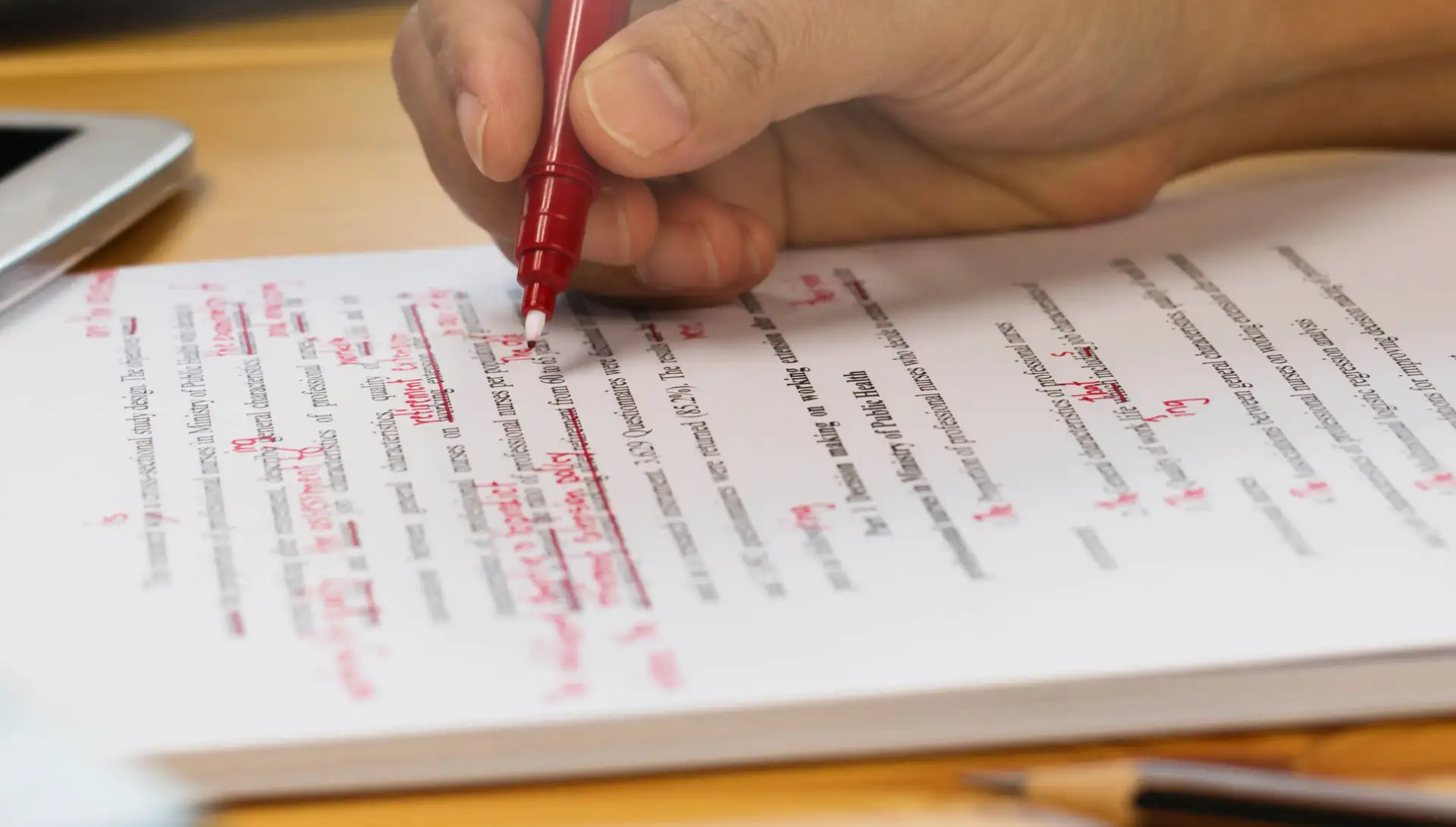
When you catch yourself thinking negatively, eliminate those words from your vocabulary, both in your writing and in your internal monologue. Just as a good editor will strike out clichés, strike out the phrases that are keeping you small.
Instead of ‘I am failing as a writer’, try ‘I am getting better at this every time I hit the keyboard.’
This sounds deceptively simple. It isn’t easy. But forming a new habit takes practice, so don’t be too hard on yourself when you slip up.
3. Use rejection as data, not as a verdict
Getting harsh feedback from an editor makes my palms sweat. That familiar feeling of being a total failure is real, and it passes. What I’ve learned to do is take the time I need to process my feelings, and then return to the feedback with fresh eyes: not as a judgement on my worth, but as information I can use.
Rejection is not the end of the story. It is editorial feedback delivered impersonally.
4. Write for one reader
Most writers tie themselves in knots trying to be universally liked — clever enough for one crowd, accessible enough for another, profound but not pretentious, original but still familiar. It’s exhausting. And impossible.
The truth is, your work does not need to seduce the entire room. It only needs to find the right person sitting quietly at the back, reading with full attention.
So write for them.
Know exactly who you’re speaking to from the outset. When you have a clear sense of your ideal reader, the noise fades. The random criticism and well-meaning opinions from people who were never your audience to begin with becomes much easier to ignore.
5. Write in private.
‘Write with the door closed’ is one of the best ways to quiet the inner critic and block out outside noise.
Here’s the idea: find your own writing space and shut the door behind you. For that time, focus only on the work in front of you. It helps keep out all the distractions, opinions, interruptions and negativity that can easily throw you off track.
Try not to share your work too early, even with people who mean well. Too much outside feedback in the beginning can make you second-guess yourself before your ideas have had a chance to take shape.
Your job is to write, not to overanalyse every sentence while you’re still creating it.
6. Connect with other writers
At the same time, self-doubt thrives in isolation. One of the most powerful antidotes is discovering, and really internalising, that other writers feel exactly as you do. Find a writing group, an online community or a trusted reader who understands the craft. SA Writers’ College runs writing circles across South Africa, and they exist precisely for this reason.
The moment you hear another writer describe the same paralysing doubts you experience, something shifts.
7. Keep going: staying power is what makes a writer
In her article ‘How To Achieve Your Writing Goals‘, Nichola Meyer makes the point clearly: it is staying power that separates writers who succeed from those who don’t. It’s not talent or a lucky break, but rather, the discipline to return to the page despite doubt and fear.
[If ‘5 Tips for Dealing with Writer’s Doubt’ contains additional strategies that fit here, insert them as points 5 and/or 6.]
8. Return to why you write
Self-doubt often hijacks the question of whether you should write. But the more useful question is why you write. When the doubt is at its worst, go back to that. Remind yourself about the story you are trying to tell, and the reader you are trying to reach. The bigger picture, or ‘why’ that is driving your writing, can give you courage in those wobbly moments.
What self-doubt is actually telling you
Here’s the uncomfortable truth: self-doubt will never fully go away. No level of success eliminates it. The goal isn’t to reach a doubt-free state. It’s to stop waiting for that state before you write.
Crippling self-doubt can keep writers from achieving their goals and becoming the best writer they can be. The good news? It’s completely normal, and it does not have to win.
The writers who go the distance are not the ones who felt no doubt. They are the ones who wrote in spite of it.
Take the next step
If self-doubt is keeping you from starting or finishing, consider structured support. Working with a tutor who gives you honest, constructive feedback in a safe environment does something remarkable: it replaces the vague terror of ‘is this any good?’ with actual, specific guidance.
Explore SA Writers’ College’s creative writing courses
SA Writers’ College has trained writers across South Africa since 2005. Our tutors are published, award-winning authors who work with students one-to-one.