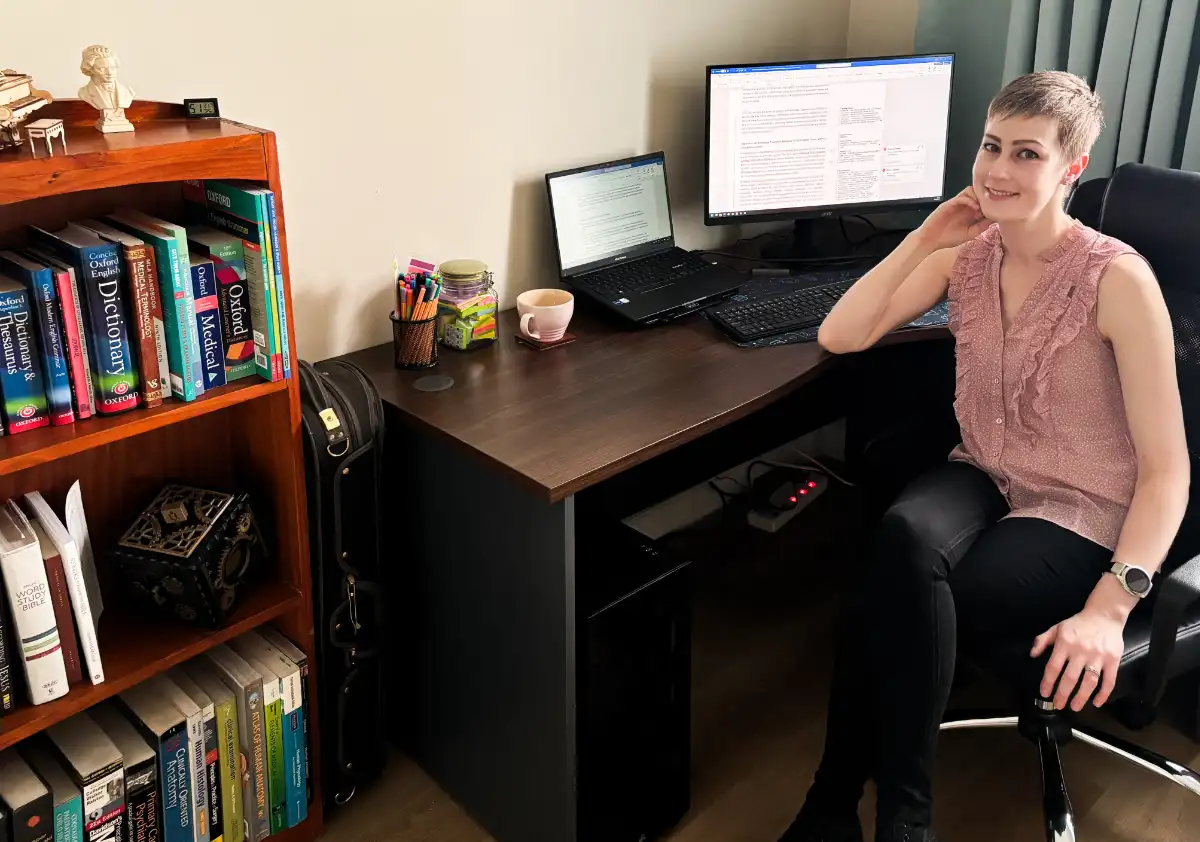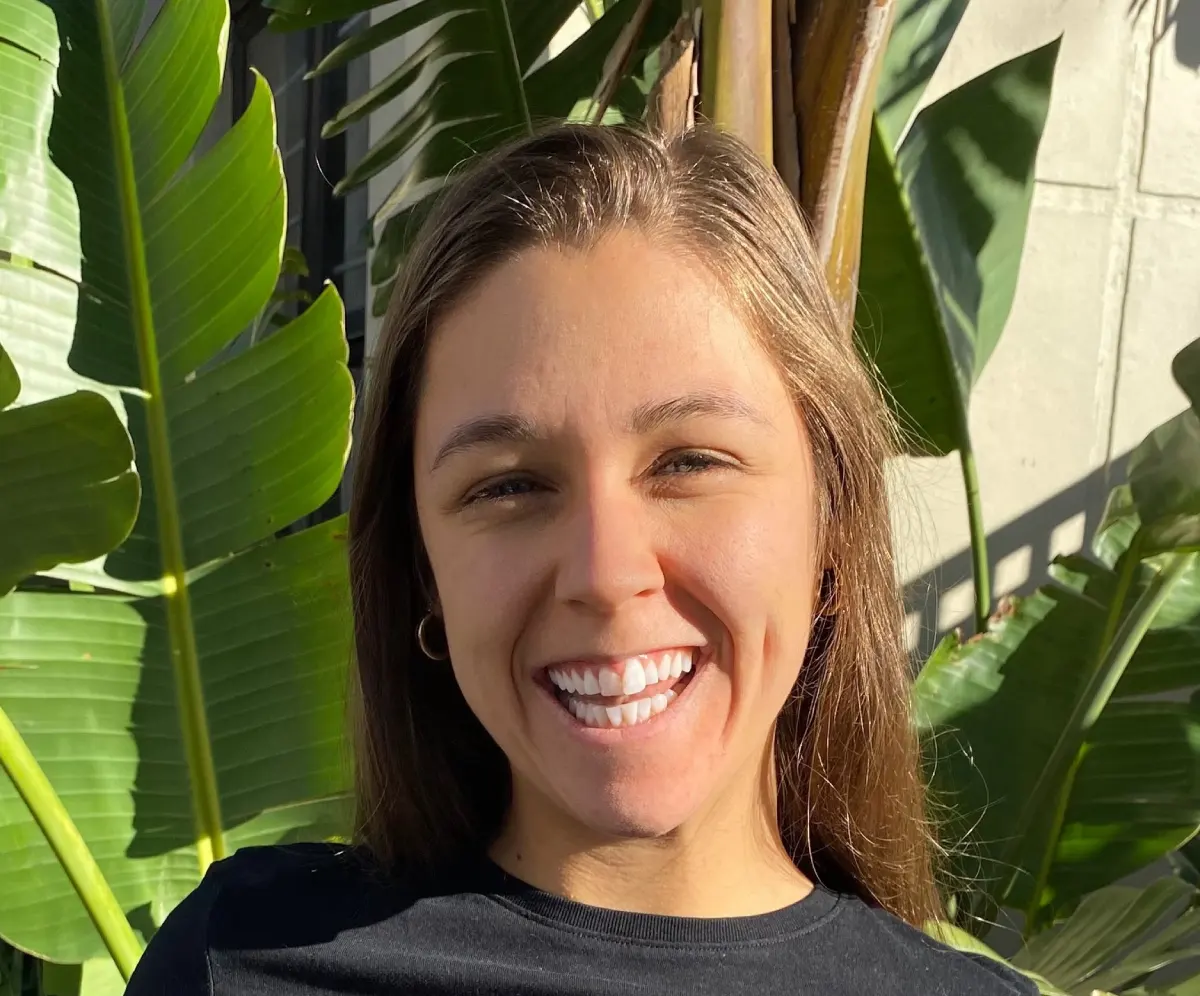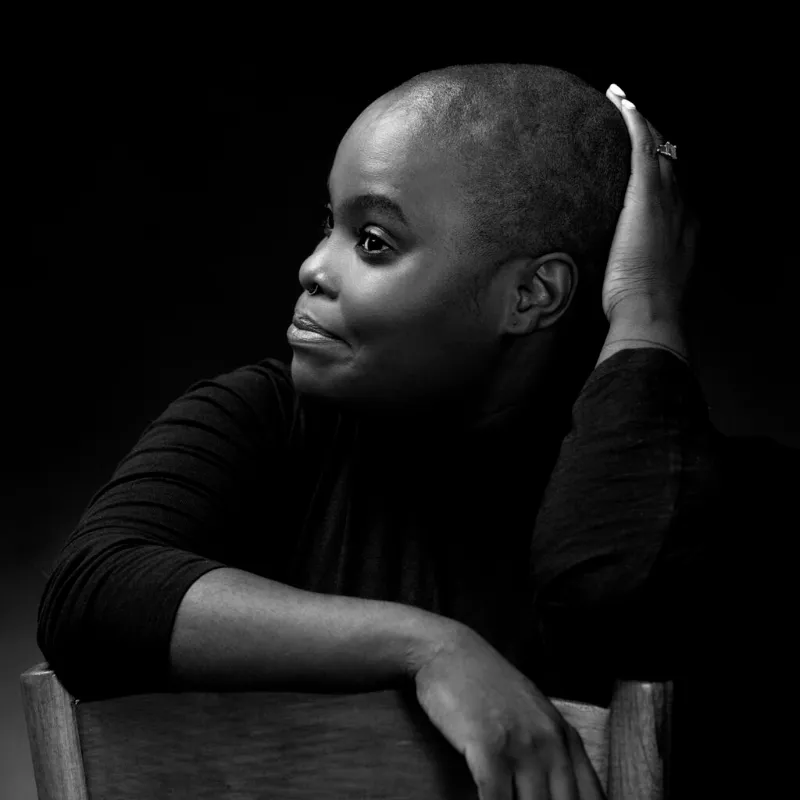
Since completing the Basic Grammar Skills Course with SA Writers’ College in 2016, South African playwright, theatre-maker and fiction writer Philisiwe Twijnstra has built a creative career shaped by imagination, persistence and bold storytelling.
Philisiwe has received both local and international recognition for her work, which is rooted in memory, identity, folklore and the lived experiences of Black women.
In 2017, her play Salty Pillows took second place at the PANSA Playwright Festival. That same year, her story ‘Little Black Sandals’ was shortlisted for the Short.Sharp.Stories awards; it was later produced by Talisman Theatre in Kenilworth, UK. She was also part of the team behind The Road, which won Best Digital Experience at the 2021 Stockholm Fringe Festival.
In 2023, she was named one of the Mail & Guardian’s200 Young South Africans in the Film & Media category and received the AWPN/Ghana Playwright Academia Theatre Residency. Her play Horny & … was also published that year in Gendering Taboos: 10 Short Plays by African Women.
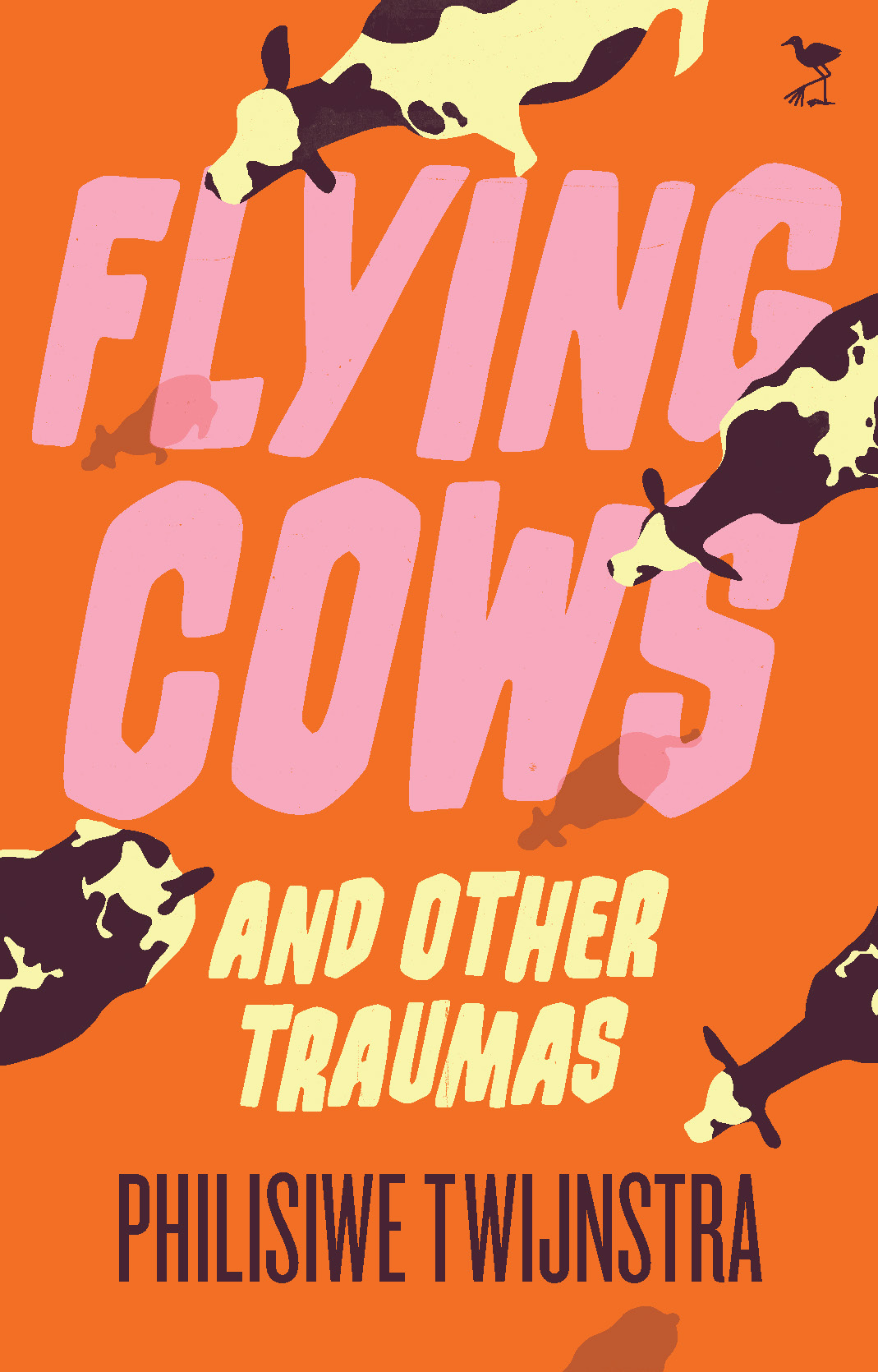
Her debut fiction collection, Flying Cows and Other Traumas, was published by Jacana Media in April 2026. It features surreal stories set in Black South African townships and imagined African kingdoms and explores themes of family dysfunction, resilience and transformation.
In this interview, Philisiwe reflects on rejection, creative courage and the journey of finding her voice as a writer.
Could you tell us a little about yourself and your background as a writer?
I was born in Germiston and studied theatre and performance at Durban University of Technology. I’m a mom to an incredible kid, Nondalo, and married to a wonderful man who has supported my dreams with care and love.
I work as a theatre-maker, playwright and fiction writer. I didn’t start as a writer; I was an avid reader of big books – sometimes inappropriate ones for an 11-year-old. My writing journey began with ‘Dear Diary’ entries as a way to spite my grandfather. I used words to mask my anger, but writing also provided an outlet that helped me continue with my day.
What first inspired you to start writing?
It was the realisation that the stories I read often lacked the endings I desired, particularly regarding the experiences of being a Black woman. I wanted to archive those experiences through literature.
This motivation became clearer when I became a mom; it fuelled my desire for different endings. My love of storytelling and imagination inspires me – the ability to conjure worlds that explore and stretch reality.
How did the grammar course you completed through SA Writers’ College help shape or improve your writing journey?
The course gave me the confidence and courage to step out of my comfort zone. Within a month of graduating, I applied for an MA in creative writing. It was the perfect preparation I needed to get started.
What was the first major breakthrough or success you experienced as an author?
Being accepted into an MA in creative writing was my breakthrough. I was introduced to the world in its entirety, exploring continents and their hidden corners through literature. I read short stories and novels from South Africa, Russia, India, Nigeria and Mexico, and I fell in love with magical realism, folklore and speculative fiction.
Could you tell us about the published work, awards or achievements you are most proud of?
This is a challenging question. I’m truly proud of all my achievements. Every accomplishment and encounter has prepared me for this bold, imaginative moment when I share my first collection, Flying Cows and Other Traumas.
Without theatre, I wouldn’t have developed such a strong imagination. Without the literature teachers I’ve met along the way, I wouldn’t have been able to trust my evolving writing voice. Through travelling the world, performing, directing and participating in residencies, I’ve gained a new awareness of the world. My perceptions and horizons have continually expanded.
What challenges did you face along the way, and how did you overcome them?
The biggest challenge has always been finding my voice and realising that this takes time. I had to keep writing, no matter how weak my work was. I struggled with the tension between the end goal and the process.
Another challenge was rejection. For a long time, I had no idea why I was being rejected. There was never feedback on my submissions. I was constantly sent back to where I had started, without guidance on how to improve my stories.
When I was picked by Jacana Media in 2024, I finally understood why I had faced so many rejections. It wasn’t because I was a bad writer or lacked imagination; I just needed to work on my technique. I needed someone with time, care and patience for emerging voices, which online magazines often lack. Now, I understand the reasons for my rejections – I only wish I had known earlier.
Do you have any advice for aspiring writers who may be hesitant to pursue their dreams?
I would say, with my full chest: write your ambitious, imaginative stories, even if they are weak or make no sense. Still, write them. Please write them.
Then have a trusted writer friend read your work, and don’t ask them what they think of it. Rather, ask, ‘What is wrong with my story? What needs work? What did you pick up that needs attention?’
As writers, we need to learn to name our difficulties. For me, those are structure and grammar. But these two beasts are becoming friendlier because I keep working on them; I look for institutions like the South African Writers’ College, and I attend many writing classes.
What projects or goals are you currently working on?
Currently, I’m a writer-in-residence at Het Veerhuis, and I’m writing my newest play, Black Kitchen. I’m looking into how Black kitchens have been the backbone of many homes and exploring the rituals and memories held in these spaces.
I also hope to be back on stage soon, performing and directing again. But most of all, I want to keep writing new stories, imagining other strange worlds and sharing Flying Cows and Other Traumas with readers around the world.
Is there a favourite quote, thought or message you’d like to share with our readers?
‘No Black woman writer in this culture can write “too much”. Indeed, no woman writer can write “too much” … No woman has ever written enough.’ – bell hooks