Stop letting your socials feed drain your focus. Here is a five-step guide to retraining your algorithm to convert digital noise into creative spark.
‘Who is your feed training you to become?’
I saw this question on the third slide of an Instagram post titled ‘9 Questions that will help you learn about yourself’, and I’ve been unable to forget about it since.
When I decided to start writing in January this year, the first thing I changed was my social media consumption. Firstly, because I spent too much time on there, but also, because consuming so much of other people’s lives and content was making me feel empty and numb, dulling my creative instincts.
It’s taken all year, and it’s taken deliberate effort, but I’ve transformed my algorithm from a dopamine minefield into a creative digital archive, filled with uplifting aesthetics, interviews and book reviews.
Here’s the five-step method that helped me reclaim my feed and turn passive screen time into a catalyst for creative output:
Understand how excessive screen time drains your creativity
The way we speak about doomscrolling makes it easy to pretend it isn’t harmful. For the longest time I was sure it wasn’t.
But according to an article published by the American Brain Foundation, doomscrolling takes an active toll on the body and brain. The overconsumption of negative short-form content causes the body’s adrenal glands to release stress hormones which jolt people into behaviour focused on self-preservation. This repeated activation of the stress response can contribute to issues like high blood pressure, an increased risk of blood clots in the arteries and changes to the brain’s cognitive abilities.
And because my brain was trapped in a loop of digital stress and cheap dopamine, it lacked quiet space for deep original thought, which affected the quality of my writing and stunted my creative output.
Switch out your screen time for a real-world creative hobby
Since I first got a cell phone and started using social media, I’ve always logged in just to kill time. This resulted in my being consumed by every post I came across without really thinking of using the time purposefully towards anything.
I realised this habit was keeping me chained to my phone, so I decided to redirect my focus toward an off-screen hobby, specifically reading and writing.
According to Dr Mike Parent, a counselling psychologist writing for Psychology Today, engaging in offline hobbies plays a key role in alleviating depression, anxiety and stress.
I started small, dedicating just 30 minutes a day to reading. (At first, I read the brilliant Normal People by Sally Rooney). Through that, I was able to build the habit. Once the habit was built, my interest grew naturally and soon enough I didn’t have to force it.
Reading replenished my imagination, gave me fresh ideas and easily replaced the urge to scroll.
‘I’ve transformed my algorithm from a
dopamine minefield into a creative digital archive.’
Retrain your algorithm to spark fresh writing ideas
Once you identify the craft or hobby you want to cultivate, actively teach your feed to match it. Search for creators in your niche, interact with their posts and let your algorithm adapt.
Surrounding yourself with people who are active in your hobby can spark new ideas or even activate a healthy sense of motivation. I, for one, have been motivated to catch up with the reading lists of some of the creators I’ve seen on ‘Booktok’, namely a creator named bookwormworldd who gives great recommendations.
READ MORE:
1. How to Fuel Your Passion For Writing
2. Time-Management Tips For Procrastinating Journalists
3. Instagram’s Not ONLY About The Pictures. 3 Writing Tricks To Make Your Insta Posts Pop!
Take screen time discussions offline to fuel your writing
Social media was originally created to connect us with people far away, not separate us from the people sitting right next to us. When you put your phone down, share what you’ve just learnt or open a discussion about what’s trending with your friends and family.
My brother and I frequently talk about current events and discourse from our algorithms, and it has led to hour-long conversations away from our screens that have not only brought us closer but have also broadened my perspective on a lot of topics and pushed me to be a more relatable writer.
Shift from passive consumer to active creator
Start sharing your own writing journey, no matter how small your audience may be. My Substack has fewer than 20 subscribers, and my Instagram has less than 100 followers, but posting my work has cured me of the illusion that creators online are inherently ‘better’ or out of reach.
Sharing your work takes back the autonomy that constantly consuming content can take away, and it turns social media into a tool for self-expression rather than self-comparison.
I used to think transforming my relationship with social media would look like going off the grid and fighting against technology, but this year I learned I just needed to change who was in the driver’s seat.
The next time you find yourself absentmindedly tapping an app icon, pause and ask yourself that same question: Who is your feed training you to become? Then use your time to answer it on your own terms.
About the Author
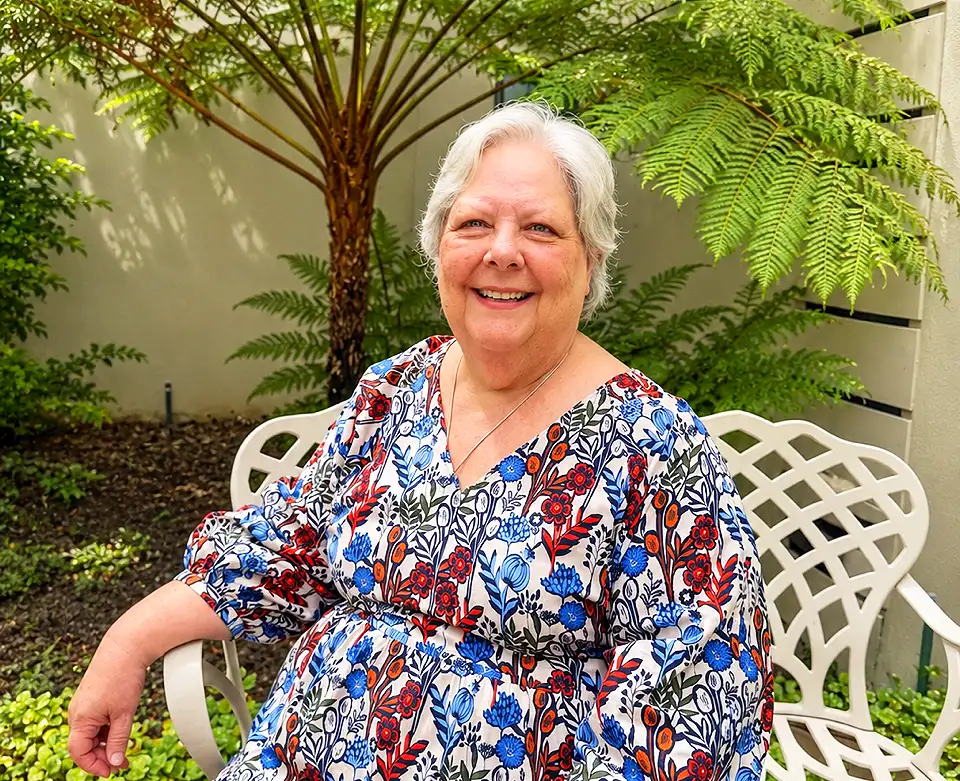
Siyema Nyaniso is a freelance writer and blogger who writes personal essays and cultural commentary for the Substack publication, Siyema’s Archives. She co-runs the digital magazine Kholoverseee.